
Looking Up Your Stanton Neighbors
Stanton block research works best when each source keeps its own job. The OC Public Works viewer identifies parcel outlines, APNs, streets, and nearby lots, but it does not document an owner or occupant layer. Tax and assessed-value records add roll facts, installments, and legal-description shorthand. The recorder index adds recorded parties and document types. City files add a physical-change timeline. Reverse directories supply historical address snapshots. Election geography adds precinct context, not a roster. Keeping those meanings apart prevents a nearby lot from being mislabeled as a household.
| Source | What It Shows About a Block | Access |
|---|---|---|
| OC Public Works OC Interactive Map / Land Records | Parcel outlines, APNs, streets, spatial context, and adjacent lots. No documented owner or occupant layer. | Free interactive viewer |
| Orange County secured tax search | Tax values, installments, status, legal-description shorthand, and parcel references. Online owner names are omitted. | Free address or APN search |
| Orange County recorder index | Recorded transfers, liens, releases, maps, and other documents tied to each APN or indexed party. | Free index since 1982; copies by request |
| Stanton permits and code files | Physical-change events, job address, scope, inspections, and labeled applicant, owner, or contractor roles. | City Clerk CPRA request |
| Orange County reverse directories | Street sequence and listed occupants or businesses for directory years, with a 1961 gap. | Library, LOC, or archive reference access |
| Election geography | Precinct or district context for the block, not names of registered voters at nearby addresses. | Aggregate information; self-lookup is authenticated |
| Community sources | Public civic facilities, library resources, and business roles that add context without a private member list. | Public sources; no verified roster |
An owner, grantee, permit applicant, directory occupant, and voter are different roles. A recorded grantee received an interest, but that deed does not prove physical occupancy. A tax mailing address can point to a PO Box, trust, agent, or another parcel. A reverse directory can omit a household or list a business. A public precinct boundary can include many addresses without identifying any voter. A responsible block lookup carries the APN and date beside each claim.
Note: A nearby parcel can be legally separate from a house that looks close, especially at a corner or behind an alley.
Trace a Stanton Block Radius
Start with one normalized Stanton address, including the unit or suite when one exists. The county tax search can return an APN from an address, while the OC Public Works spatial viewer lets the researcher inspect the target parcel and the lots around it. The goal is a short, labeled set of adjacent or fronting parcels, not a sweep across an entire street.
- Normalize the address and search the secured tax portal. Capture the APN, situs address, tax year, and any unit detail shown.
- Open the OC Interactive Map / Land Records viewer. Center the target and note street boundaries, alleys, and parcel polygons.
- Select only touching or relevant fronting parcels. Corners, condominiums, alleys, and flag lots need a written reason for inclusion.
- Transcribe each APN one by one. Run the same APN through tax, assessed-value, and recorder sources, keeping mailing and situs labels distinct.
- Request permit or code records by job address, APN, case number, and date range when a physical-change question remains.
This process separates a parcel from the people who may use it. For the whole named street and its longer address chain, move to the Stanton street directory workflow rather than expanding a block lookup until it becomes a street-wide list.
Stanton Recorder Evidence
Official title evidence should stay tied to the exact parcel. The Orange County recorder web index begins with records from 1982, uses grantor, grantee, APN, document type, date, map, and book or page modes, and opens indexed details rather than deed images. Search each adjacent APN separately. If a legal description or signature matters, follow the county's official-copy instructions after noting the result identifier.
The Orange County Clerk-Recorder supplies the official-record context for the capture below. It is a custodian reference, not a combined list of Stanton neighbors.
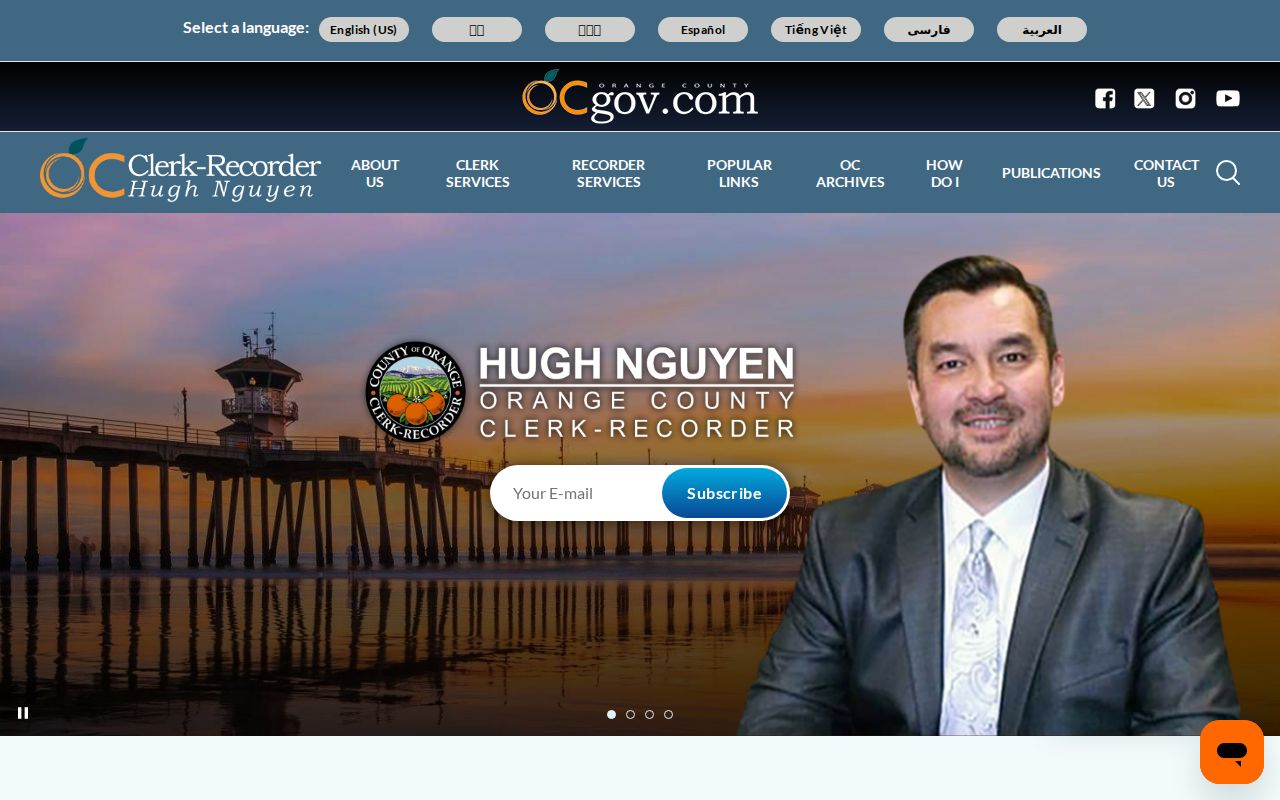
An index result can point to a deed, lien, release, map, or easement. It cannot turn a block into a named household list. Recorded pages cost $1 per page plus certification when requested, so note identifiers before ordering.
Stanton Parcel Adjacency Rules
Visual closeness is not legal adjacency. A corner lot may front two streets. An alley can separate parcels. A condominium project may place many units over one parcel record. A flag lot may sit behind a frontage parcel and look close without sharing the same legal edge. Select only parcels that touch or front the target for the question at hand, then mark why each one was included.
Stanton final-map requirements show why legal descriptions matter. Subdivision boundaries, lot and block lines, street centerlines, easements, city boundaries, numbered parcels, and centerline ties can explain a spatial display that looks simple. The APN, tract, lot, and legal description are durable keys when a postal label or unit format shifts. Stanton's 90680 core also has documented edge addresses carrying 92804 Anaheim or 92841 Garden Grove postal labels, so postal proximity cannot settle city or parcel jurisdiction. Preserve unit numbers rather than merging a multi-unit parcel into one home.
- Parcel
- A legally defined piece of land tracked by the county, even when several units or structures sit on it.
- APN
- Assessor's Parcel Number, the county identifier used to carry one parcel across tax, GIS, and record searches.
- Situs address
- The physical location of the parcel, which can differ from the mailing address used for tax notices.
- Legal description
- Tract, lot, block, map, or related wording that identifies the land more precisely than a street label.
Note: A parcel boundary can cross a postal edge while the legal description still identifies the same Stanton land.
Stanton Tax Names Have Limits
The Orange County public assessed-value record accepts an eight-digit APN and omits the owner name by law. That is a key Stanton research limit, not a broken search. The result can support roll-year, situs, land value, improvement value, total assessed value, exemption or taxable-value details, and parcel-map references where shown. The county's property-tax information layer updates annually, generally after the late-July roll release, so a recent change may wait for the next update.
The secured tax search supports address autocomplete, APN, and Tax Default Number. Capture installments and status, then check special assessments such as CFDs, Mello-Roos, or PACE when they appear. Mailing address and situs must stay in separate fields: a mailing address can be off-site, a PO Box, an agent, a trust, or a management address. More detailed assessment or map material can be requested through the county counter or written order, but no broad public owner-name web search was established.
Note: A tax record can describe a parcel and its roll status without proving who currently lives among nearby households.
Stanton Permits Mark Property Change
No public Stanton permit or code-case search was located. The fallback is a focused California Public Records Act request to the Stanton City Clerk, routed to the city building or planning staff as needed. Describe the job address, APN, permit or case number, record type, and date range. Requests can be made by mail or in person at City Hall, by email to PVazquez@StantonCA.gov, or by fax at 714-890-1443. The records line is 714-890-4245. An emailed request needs city confirmation within three days.
The permit form separates Building from Grading, Commercial from Residential, and SFR from Apartment/Condo. It asks for job address, owner or owner-builder status, contractor license details, project scope, square footage, valuation, and signer role. Those labels matter. An applicant may be an architect or contractor, and a contractor address is not the job address. Closed code files may show a change at a parcel, while complainant or sensitive details can be redacted.
Stanton Voter Lookup Stays Private
Orange County's voter self-verification tool is not a public neighbor browser. It asks for date of birth, the last four digits of a California driver license or ID or Social Security number, and the first three letters of the first name. After authentication, a requester may see the requester's own registration status, mailing address, party, voter history, districts, and ballot options. Those fields do not authorize address-by-address browsing.
The county voter-data application requires an approved purpose, a wet signature, payment, and supporting identification. Commercial use and redistribution are barred, and the active file excludes protected records and sensitive identifiers. For Stanton block context, use public precinct or district aggregates. Do not treat a self-lookup match, an aggregate count, or a restricted file as proof that a named person is a neighbor.
Note: Voter presence is an authenticated or restricted record question, not a shortcut to a Stanton household roster.
Stanton Person Databases Have Narrow Scope
Some official person databases answer a narrow custody or safety question. They should not be repurposed as block directories. A name, age, address, or registry entry can be incomplete or belong to another person, so any result needs the custodian's own warning and a lawful reason for review.
The California Department of Corrections and Rehabilitation locator illustrates a purpose-built index rather than a neighborhood directory.
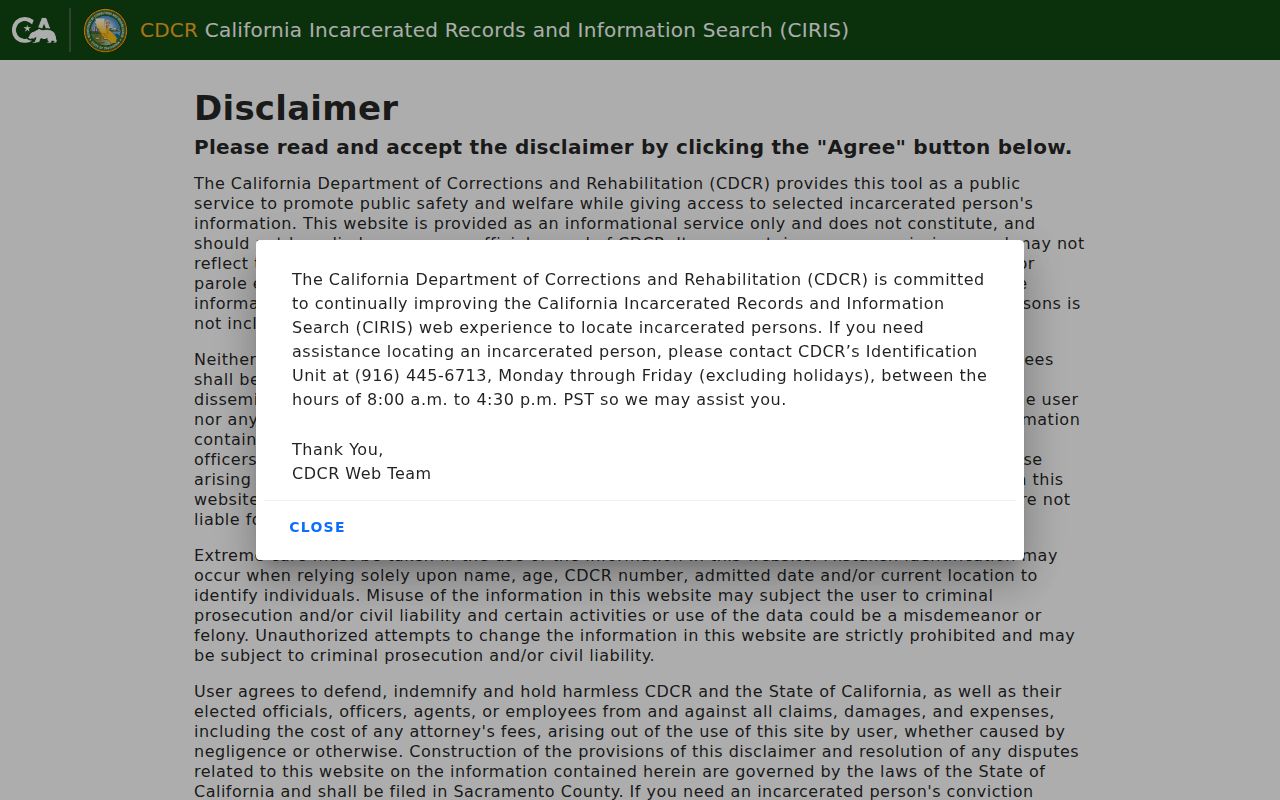
Its fields and omissions serve a specific state custody use. They do not establish who lives near a Stanton parcel, and they should never be combined with parcel proximity to label a neighbor.
The California Megan's Law website has a separate, legally limited registry purpose.
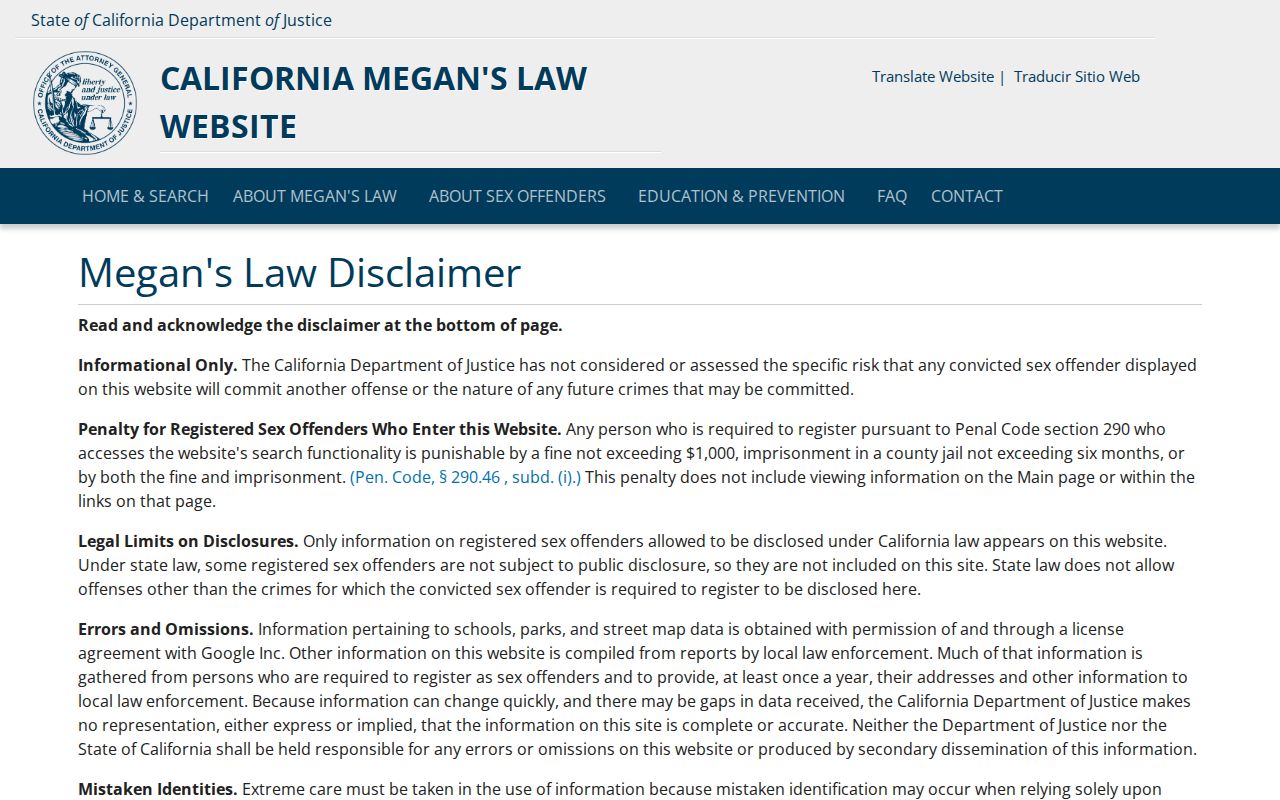
Its warnings make the boundary clear: a missing or matching name is not a complete identity finding. A Stanton neighbor lookup should remain anchored to parcel evidence and personal safety awareness, never to a public targeting list.
Stanton Community Context Without Rosters
No verified public Stanton HOA or neighborhood-association member directory was located. That absence matters. A neighborhood name, a civic facility, or a business record can add context, but none should be presented as a private list of member households. The Stanton Library can help with catalog searches, public computers, licensed databases, OCPL community-memory resources such as OC Stories, and local referrals. Its branch information does not claim a Stanton-specific member directory or dedicated local-history shelf.
| Public source | Useful block context | Boundary |
|---|---|---|
| Stanton City Clerk | Municipal permits, planning files, agendas, and local administrative records requested by address or date. | CPRA review and redactions apply; no private roster. |
| Stanton Library and OC Public Libraries | Catalog help, licensed databases, newspaper access, and referrals to county collections. | Access support is not proof of a resident's address. |
| Public civic or business records | Facilities, public roles, and documented enterprise activity near a block. | A public role or business address is not a household identity. |
Use public community context to understand how a block is served, not to fill gaps with guessed association membership. The lack of a verified directory is a finding, not permission to invent one.
Privacy Limits on a Neighbor Lookup
Household members, utility customers, delivery records, and a resident's day-to-day presence are not supplied by the parcel viewer. California's Safe at Home program gives eligible participants a substitute mailing address through an enrolling agency, while a property legal description or location can remain public. A person who needs protection should ask the custodian about statutory redaction or address protections rather than trying to infer a hidden household.
Lawful use. Stanton neighbor records are for personal, lawful research, reconnecting, civic curiosity, and safety awareness. Do not use them to stalk, threaten, harass, or intimidate anyone; California sources warn that misuse can bring criminal or civil consequences.
Official records and commercial neighbor tools also differ in ways that matter:
| Question | Official Stanton or Orange County sources | Commercial neighbor tools |
|---|---|---|
| Where names come from | Separate parcel, deed, tax, permit, or historical directory records with a named custodian. | May combine public and purchased data with unclear timing or source labels. |
| What proximity means | APN and legal-description evidence can establish parcel relation, not occupancy. | Address matching may suggest a connection without showing why it is current. |
| How to verify | Return to the county, city, library, or recorder and request the underlying record. | Results may be stale, incomplete, or difficult to correct at the source. |
A sound block process ends with a dated APN trail, a clear source label, and a refusal to turn missing data into a guess about a living person.