
Stanton City Directory Collections
Stanton's directory evidence lives in several places at once. The most reliable proof spreads across national, county, library, and genealogy channels rather than one continuous local run. NARA names Stanton in Orange County directories for 1926, 1929, and 1931, and those exact years matter more than any broad claim of coverage. The online inventory names no publisher. No sample entry exists for direct inspection either. The Orange County Archives confirms it holds directories, though its public page stops short of listing every year on the shelf.
| Collection | Years | Where Held | Access |
|---|---|---|---|
| Orange County directories | 1926, 1929, 1931 | NARA directory holdings and inventory | Inspect the title page and locality heading; publisher not stated |
| Orange County street-address directories | 1955-1985, except 1961 | Library of Congress collection | Reverse pages and alphabetical pages; consult the volume in person or through reference help |
| Orange County directory holdings | Years not enumerated online | Orange County Archives | Request the exact call number and volume from reference staff |
| OCPL library and licensed genealogy channels | Varies by database | Stanton branch and systemwide catalog | Ask staff to identify the holding branch; in-branch database access may apply |
| FamilySearch county collections | Marriages 1849-1957; births and registers vary | FamilySearch catalog and collection pages | Account or FamilySearch Center access may be required |
The Library of Congress run covers the years after Stanton's 1956 reincorporation. One year, 1961, is missing. Keep that gap visible in any research log. A county shelf may still hold a volume no one has digitized. A library database may offer an index without an open image to read. Treat any coverage table as a plan for searching. Never treat it as proof that every year contains every address.
Note: A catalog entry can confirm a holding while leaving the exact Stanton page and publisher unresolved.
Read a Stanton City Directory Entry
No digitized Stanton page carries enough authority to trust on its face. Inspect a real entry first. Read its marks before treating them as fact. Open with the title page, the locality heading, and the abbreviation key. Then copy the name line and its address exactly as printed. Keep every initial, punctuation mark, and spelling quirk. Note any spouse or widow notation too. Remember what a directory is. It is a time-stamped clue, not a census of everyone tied to an address.
| Title and publisher | Record the title line, named publisher if printed, and year. Leave the publisher open when the inspected source does not state one. |
|---|---|
| Locality heading | Copy the place label exactly, including Benedict, Stanton, or an unincorporated wording. |
| Name line | Capture surname, given name, initials, and any spouse or widow marker printed with the entry. |
| Listed address | Retain the house number, street, unit, or business address as printed, including punctuation and cross-references. |
| Telephone | Note a telephone number only when the volume includes one, and preserve the old format. |
| Symbols and redirects | Record symbols, alternate listings, and page references before drawing a family connection. |
- Criss-cross directory
- An address-to-name section arranged by street and number. It is often called a reverse directory.
- Householder index
- An alphabetical name section that points from a listed person to an address; it does not prove that every household member appears.
- Abbreviation key
- The volume's guide to short forms and symbols. Photograph or transcribe it before reading any mark.
- Locality heading
- The place label used by the volume. It can decide whether a search belongs under Stanton, Benedict, or a county-wide heading.
Keep the gap visible. The missing online sample means publisher, entry format, and symbols remain questions for NARA, Orange County Archives, or an OCPL-assisted inspection.
Trace Stanton City Directory Households
A directory works best as one dated layer in a longer household trail. Start from a name or address you already trust. Branch out from there. Move through the firmest local directory years, then into the reverse run and the census. The point is never to make one record carry the whole family story. The point is to see whether names, addresses, relatives, and dates agree. The sources that overlap should tell one story.
- Write down the target name, initials, known address, and the narrowest likely era. Keep spelling variants beside the main form.
- Search the NARA-listed Orange County years, 1926, 1929, and 1931. Copy the locality heading and page reference with each result.
- For a later address, use the Library of Congress reverse pages from 1955-1985, leaving the 1961 gap marked, then check the alphabetical section.
- Pair the directory clue with a federal census schedule. The 1950 schedule calls the place unincorporated Stanton, so an incorporated-city filter can miss it.
- Test the link with a newspaper notice, FamilySearch event index, probate record, or archive-held volume. Note which source supports each fact.
Names vanish from directories for dull reasons. A person moved. A spelling changed. Enumeration timing differed, or the volume simply skipped the locality. Sometimes only one listed person was carried forward into the next edition. So a blank year is a prompt, not proof that the household left Stanton. Reach for a second source before concluding anything. When the address itself is the question, the Stanton previous residents search keeps that trail front and center while you work backward through the records.
Reverse and Alphabetical Pages Differ
The Orange County reverse run earns its keep because its two halves answer different questions. A reverse page starts with a street and number. An alphabetical page starts with a surname. Reading both sides of the same volume catches a misspelled name, a changed street number, or a listing tucked under a nearby locality.
| Page type | Start with | Likely result | Best check |
|---|---|---|---|
| Reverse or criss-cross | Street name and house number | Listed person, household contact, or business at that address | Copy the full street line and check the alphabetical pages |
| Alphabetical | Surname, given name, or initial | Listed address and possible spouse detail | Compare the address with the reverse section and a census year |
This comparison is the best feature of the 1955-1985 collection. The year 1961 is absent from the run. It can tie a family name to a place. It does not pretend the directory is a deed. It also exposes why a single lookup is weak. A printed line may simply reflect the volume's own rules. It could reflect its annual cutoff. Or it may show a short form that only the abbreviation key can decode.
Note: Reverse and alphabetical pages should be read together because one section can correct an address or name misspelling.
Stanton's Era Labels
Stanton's catalog language follows its civic history, and that history is twisty. Orange County was carved from Los Angeles County in 1889, with Santa Ana as the seat. The area went by Benedict before the name settled. The Pacific Electric Santa Ana-Watts line opened in 1906. Residents incorporated as Stanton in 1911, disincorporated in 1924, and reincorporated on June 4, 1956. The 1950 census calls it unincorporated Stanton.
Search the label that fits the year. Benedict, incorporated Stanton, and unincorporated Stanton are not interchangeable catalog terms. Try all three when a name seems absent from a directory.
That quirk shapes every Stanton search. A county-wide Orange County volume often beats a title that sounds like a self-contained Stanton book. The transport corridor and the shifting civic status both shaped how directories, census schedules, and county records described the same ground.
The Stanton Library Predates the City
The Stanton branch listing gives the local access point as 7850 Katella Avenue, Stanton, CA 90680, phone 714-898-3302. Hours run Monday through Thursday, 10 a.m. to 7 p.m., and Saturday, 9 a.m. to 5 p.m. Computers, Wi-Fi, and staff help make the branch a practical stop for a catalog search or an in-branch licensed database. The branch page does not confirm a dedicated city-directory shelf, an obituary index, or a genealogy room. Ask staff which branch holds the volumes instead of assuming a local run sits on site. The listing itself works well as an access record.
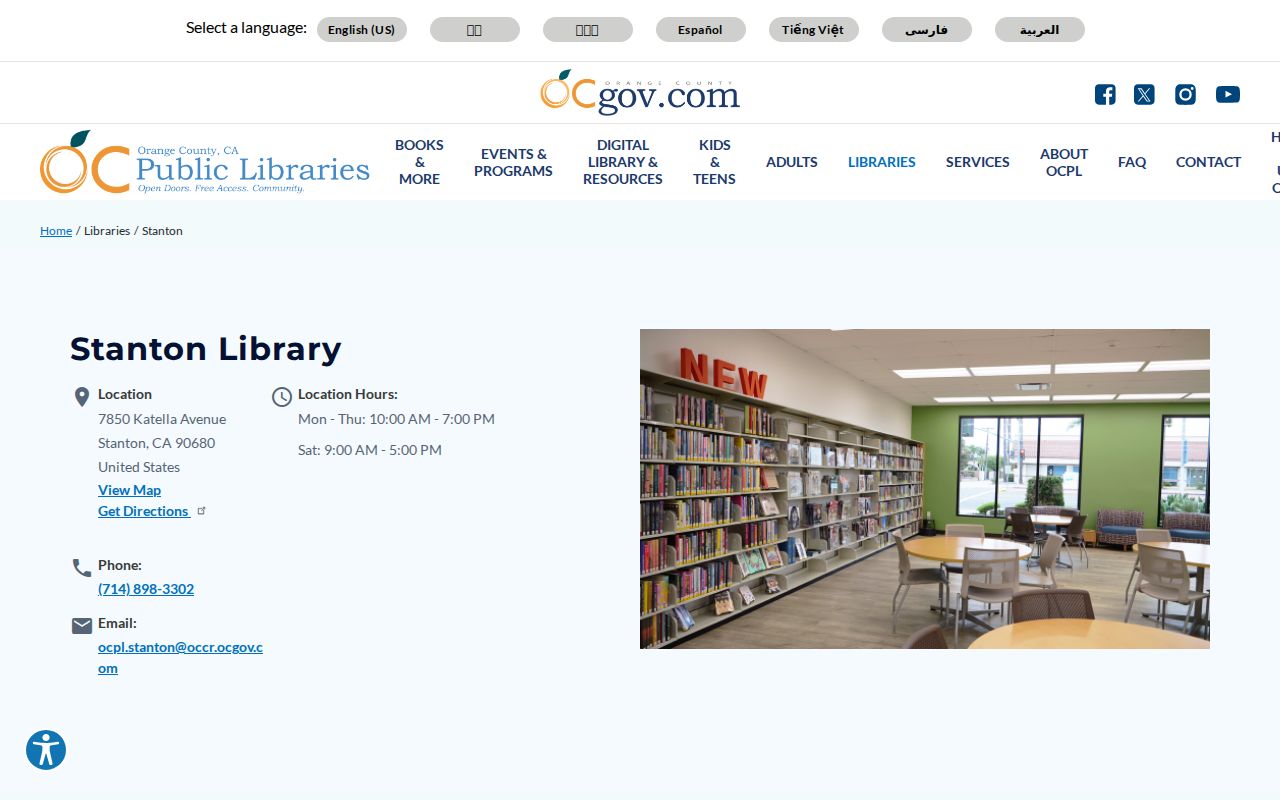
The branch's public services support a careful search, but pin down the exact directory volume through the systemwide catalog or reference staff before you plan a visit. The OC Public Libraries timeline records the Stanton branch opening on April 1, 1940, moving to a shopping center in 1956, and settling into the Civic Center in 1974.
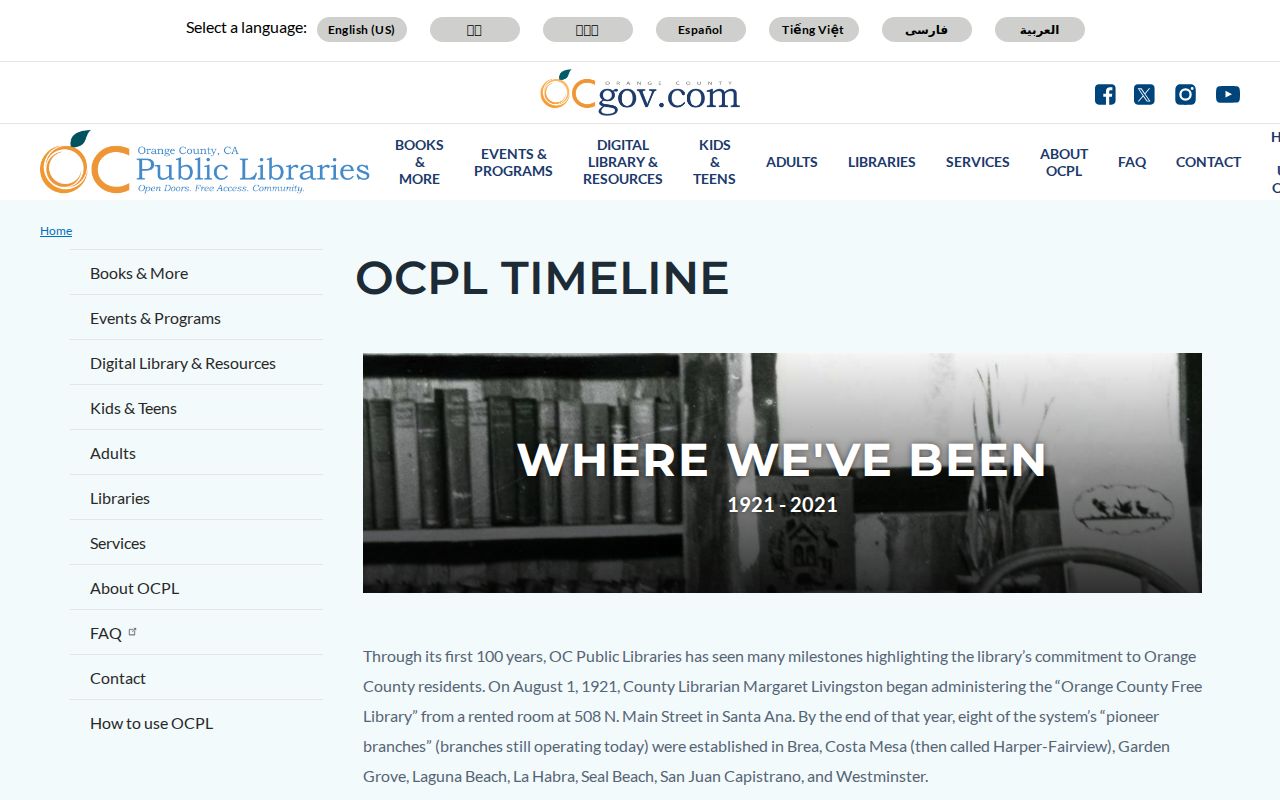
Stanton's library goes back sixteen years before the city's 1956 reincorporation. That early start gives anyone digging through a historical Stanton residents directory a solid local anchor, without pretending the library held every volume ever printed for the area.
Note: A branch can provide access help without guaranteeing that a city directory volume is stored on site.
Stanton City Directory Archives
The Orange County Archives holdings page lists directories alongside newspapers, magazines, and photographs. It also covers historic property and vital material. The reading room sits in Old Courthouse Room 108, 211 W. Santa Ana Boulevard, Santa Ana, CA 92701. Reach the staff at 714-834-2536 or archives@rec.ocgov.com. Doors open Monday through Friday, 9 a.m. to noon and 1 p.m. to 4:30 p.m. Most county records on those shelves predate 1960. Planning a trip around a broad holdings label? Ask for the exact call number and volume first. The archive works best as a shelf-and-reference route for city directory research. It is not a promise of open scans.
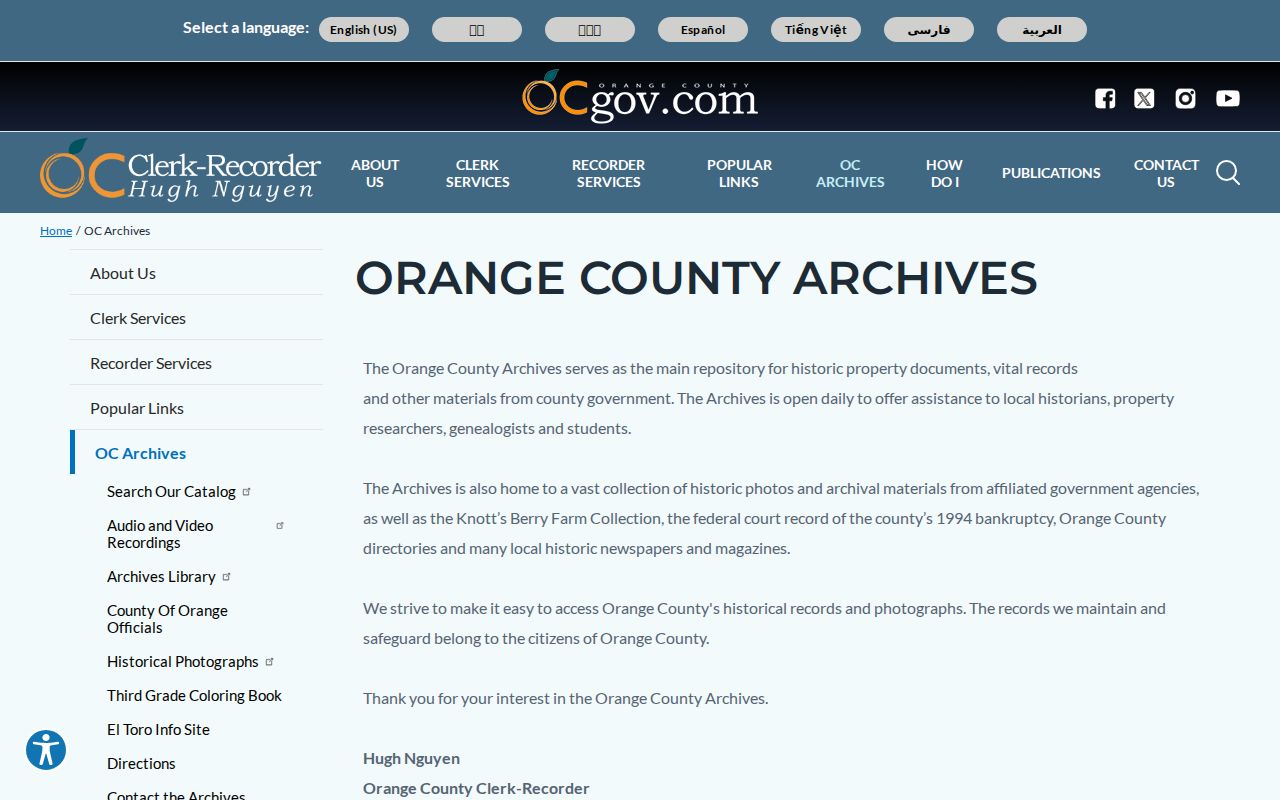
The archive image leads back to the county custodian who can name a volume, explain access, and tell a residents directory apart from a newspaper or property record. That distinction matters more than it sounds.
The Orange County Historical Society adds a community layer. Its reference library holds more than 1,200 volumes and roughly 6,000 photographs. Names, places, and leads come easily from those shelves. Treat them as secondary evidence, though. When a conclusion counts, cite the underlying directory, census, deed, or vital record itself.
Stanton City Directory Census Pairing
The National Archives census research channel opens free access to the 1950 schedules. Access follows the 72-year release rule. Stanton appears there as unincorporated. It counted 1,762 people in 1950. That label matters when a directory search gets filtered by city. Pair the census household with directory work. Check names, ages, and relationships there. Then return to the city directory for the years between snapshots.
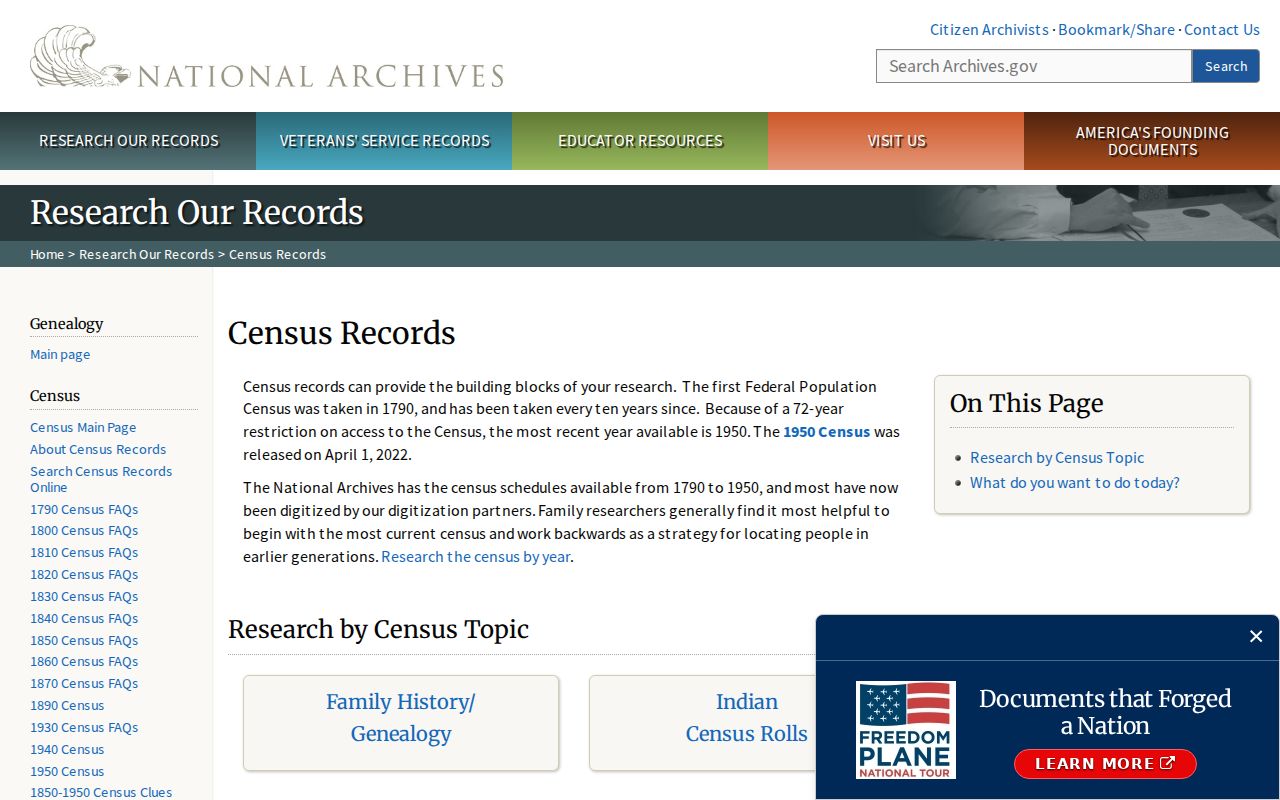
A census image belongs beside a directory note, never in place of one. Record the enumeration label and household details first. Then compare them with the 1926, 1929, 1931, or post-1955 directory evidence.
Newspapers build another bridge. The California Digital Newspaper Collection supports full-text historical searching, though OCR often misses names. Work around it. Try initials, spouse or relative names, exact address fragments, business names, and nearby community labels. OCPL's digital newspapers extend the hunt through library channels. NewsBank access to the Orange County Register from 1987 forward widens it. Obituaries and legal notices can tie relatives to dates. But they stay clues until the underlying record turns up.
FamilySearch Adds Event Evidence
FamilySearch earns its place when a directory gives a name but no clear family link. The Orange County marriage collection sits inside California county marriages from 1849-1957 and reports 146,655 entries. Other Orange collections cover births from 1887-1921, a birth index from 1887-1956, delayed births from 1943-1980, and a death or burial permit master index from 1889-1955. Expect uneven images. Some may be restricted, absent, or viewable only through an account or center.
- Use a marriage index to test a spouse name, date, or county connection.
- Use birth and delayed-birth material to compare a name, parent, and place, while observing copy limits.
- Use the California Great Registers from 1848-1921 when the county year is available and a historical voter clue fits the question.
- Ask the Orange County FamilySearch Center in Orange about helpers, classes, scanning equipment, and access support.
The local FamilySearch Center sits at 674 S. Yorba Street, Orange, CA 92869, phone 714-997-7710. Its staff provide access support. They cannot guarantee every indexed image is viewable on site. Keep the collection name, year, image status, and index wording in your research notes.
Stanton City Directory Gaps Need Care
The biggest gap is plain to state. No authoritative online Stanton entry page or publisher is documented. The NARA inventory names the firm years but never a publisher. The Orange County Archives page confirms holdings without a full year list. The Library of Congress run gives a strong reverse-directory bridge, yet 1961 is missing. Limits like these make careful source handling worth more than a polished-looking name result.
Need a volume? Ask NARA, Orange County Archives, or the Stanton branch through the OCPL catalog. Ask them to inspect the title page, locality heading, entry, and abbreviation key. Never insert a familiar publisher name by guesswork. A missing name can reflect spelling, timing, a move, rural delivery, or thin coverage. For an heir trail, weigh the residents directory against census, newspaper, probate, marriage, and vital evidence. Only then settle a relationship.
When the question turns from a historical shelf to one person, the Stanton resident lookup offers a separate verification path. For one address across earlier years, use the previous-resident workflow. That is simpler than rebuilding a modern street record chain here.
Note: A directory can open a family trail, but the custodian-held record should carry the final conclusion.